Emarsys is a digital marketing platform from SAP that provides a desktop web application for marketers to personalize their marketing efforts and engage better with customers. The platform needs an interface enabling administrators to manage user accounts independently, without involving Emarsys support.
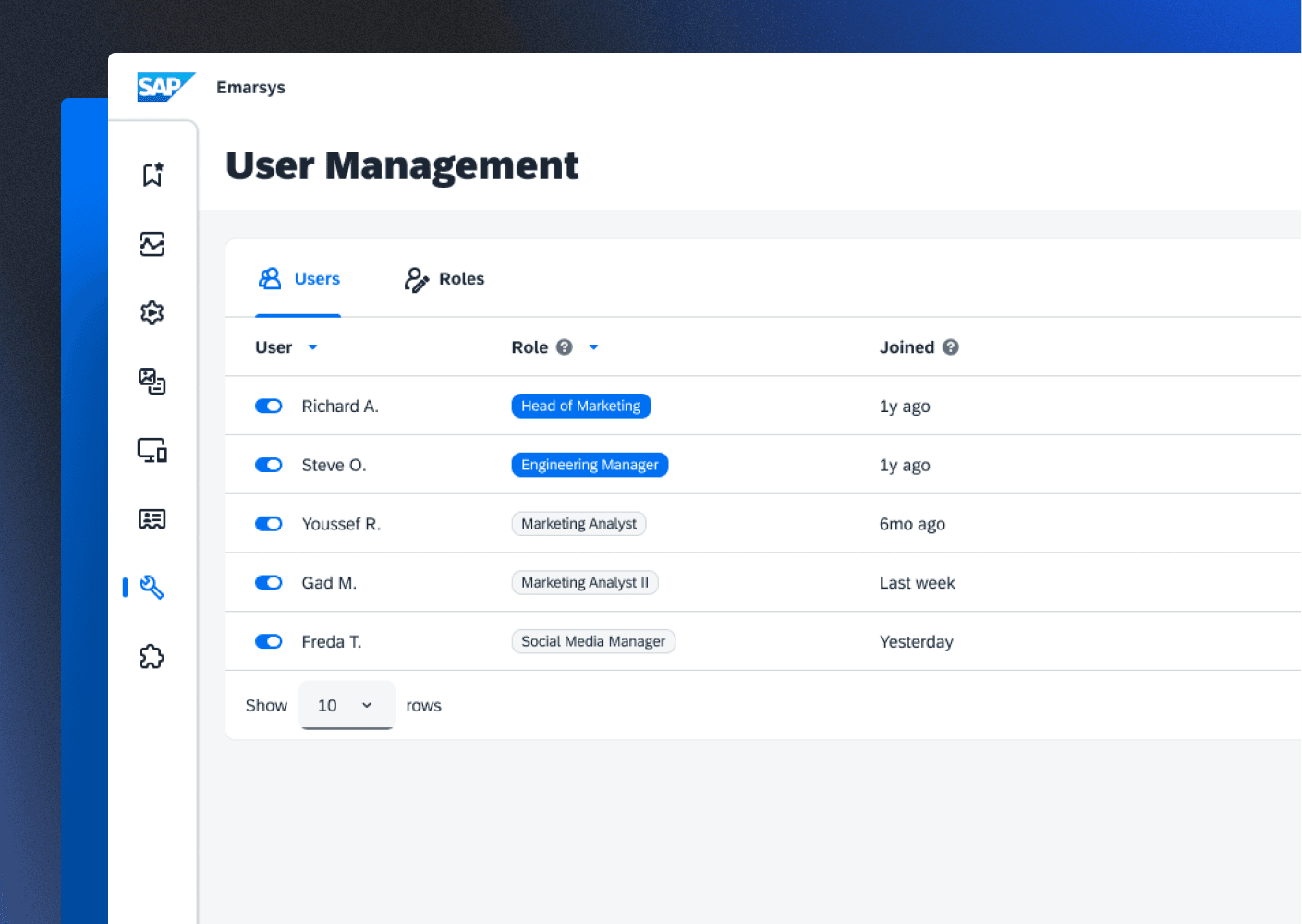
Project Goal…
Creating a high-fidelity, clickable prototype for user management, allowing administrators to add, edit, delete, and deactivate users.
Research
Who are we designing for?
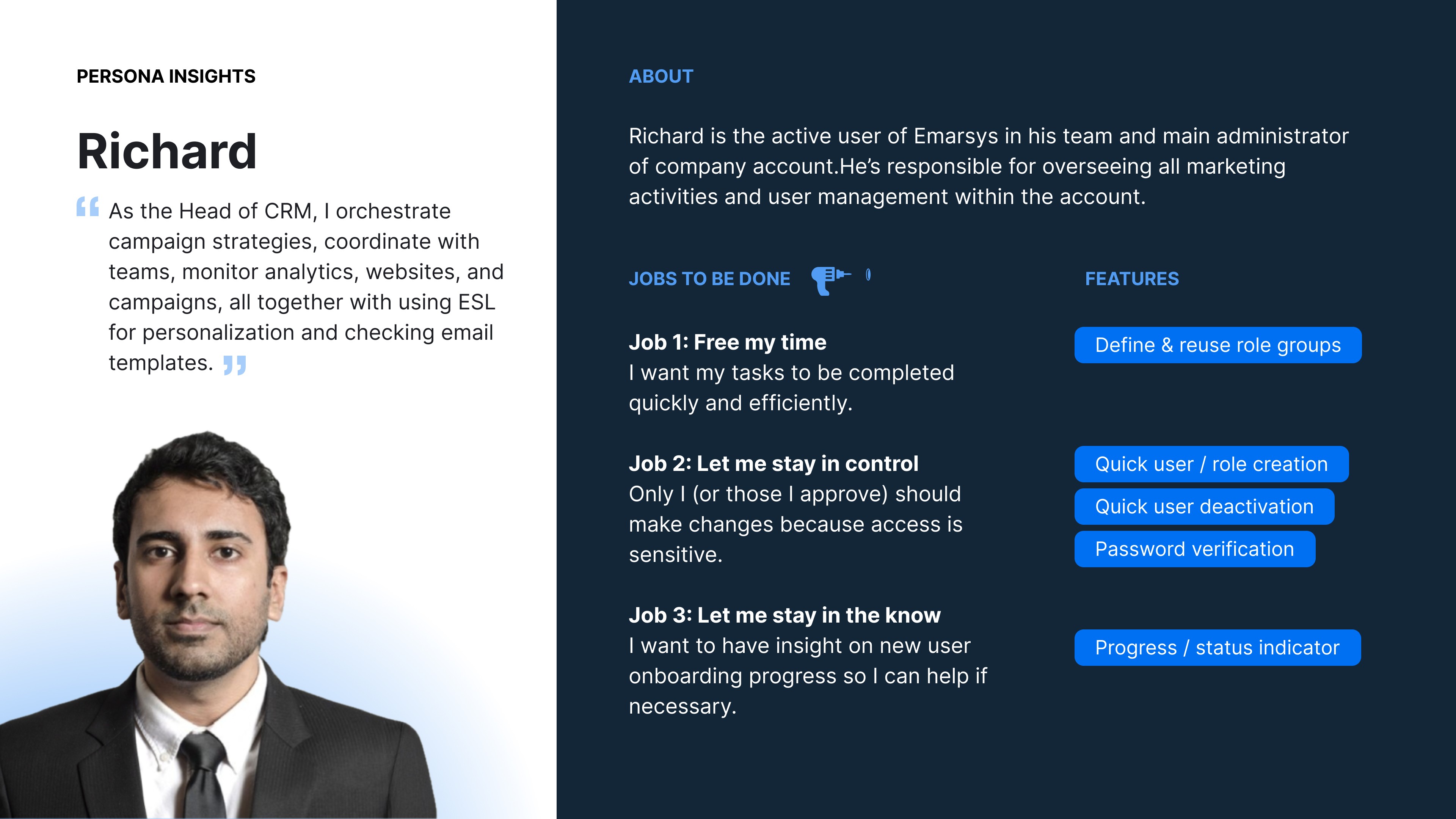
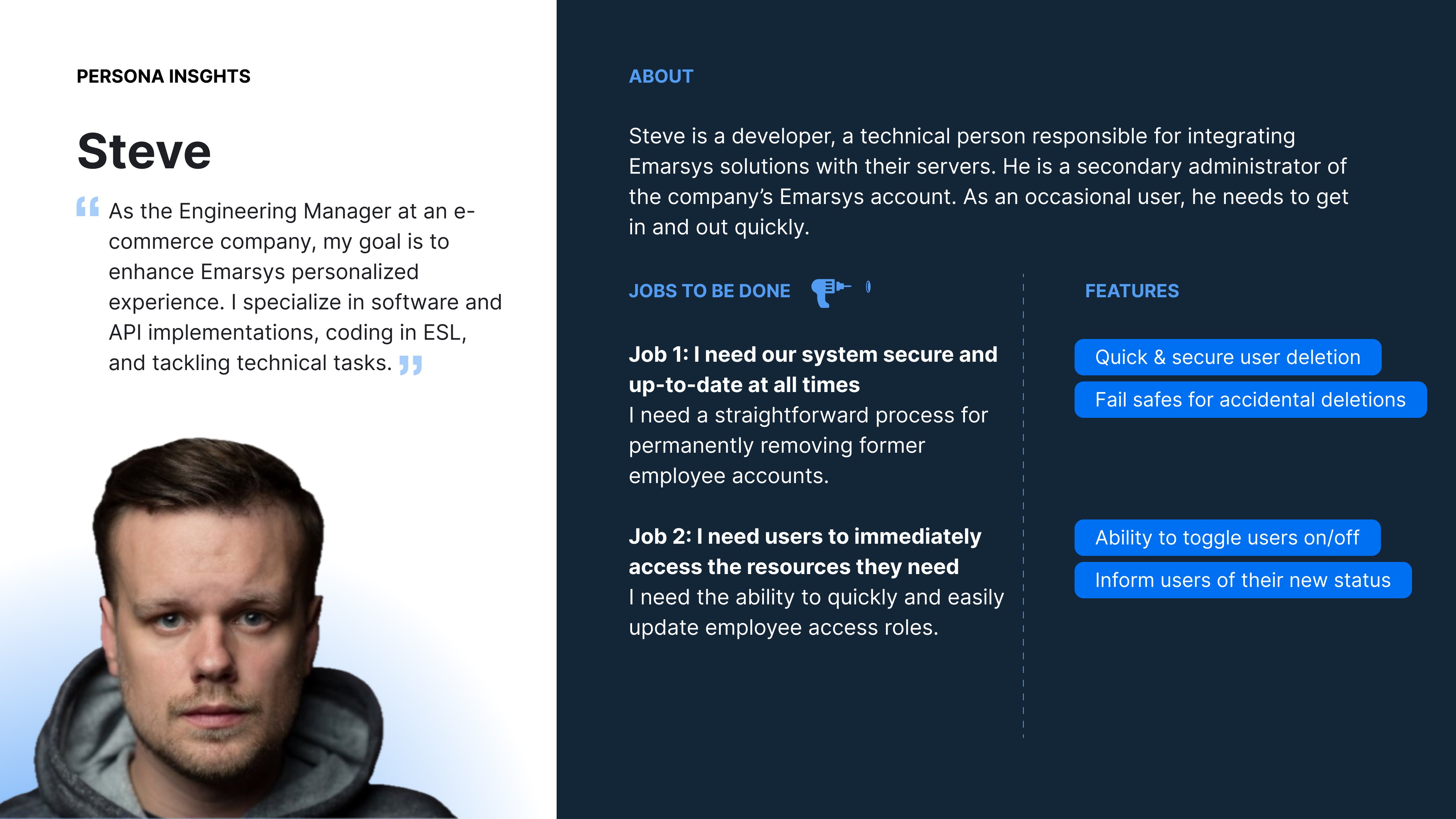
Quotes from interviews…
“While working with AWS, we utilized Resource Groups to predefine what features certain roles had access to. Not knowing the billing implications of some of these decisions cost us dearly!”
Elijah, Product Manager @Telnyx
“On our team, we used Gitlab pipelines with predefined stages to track delivery. It allowed you to easily spot failed tests or issues”
Janet, Software Developer
Ideation
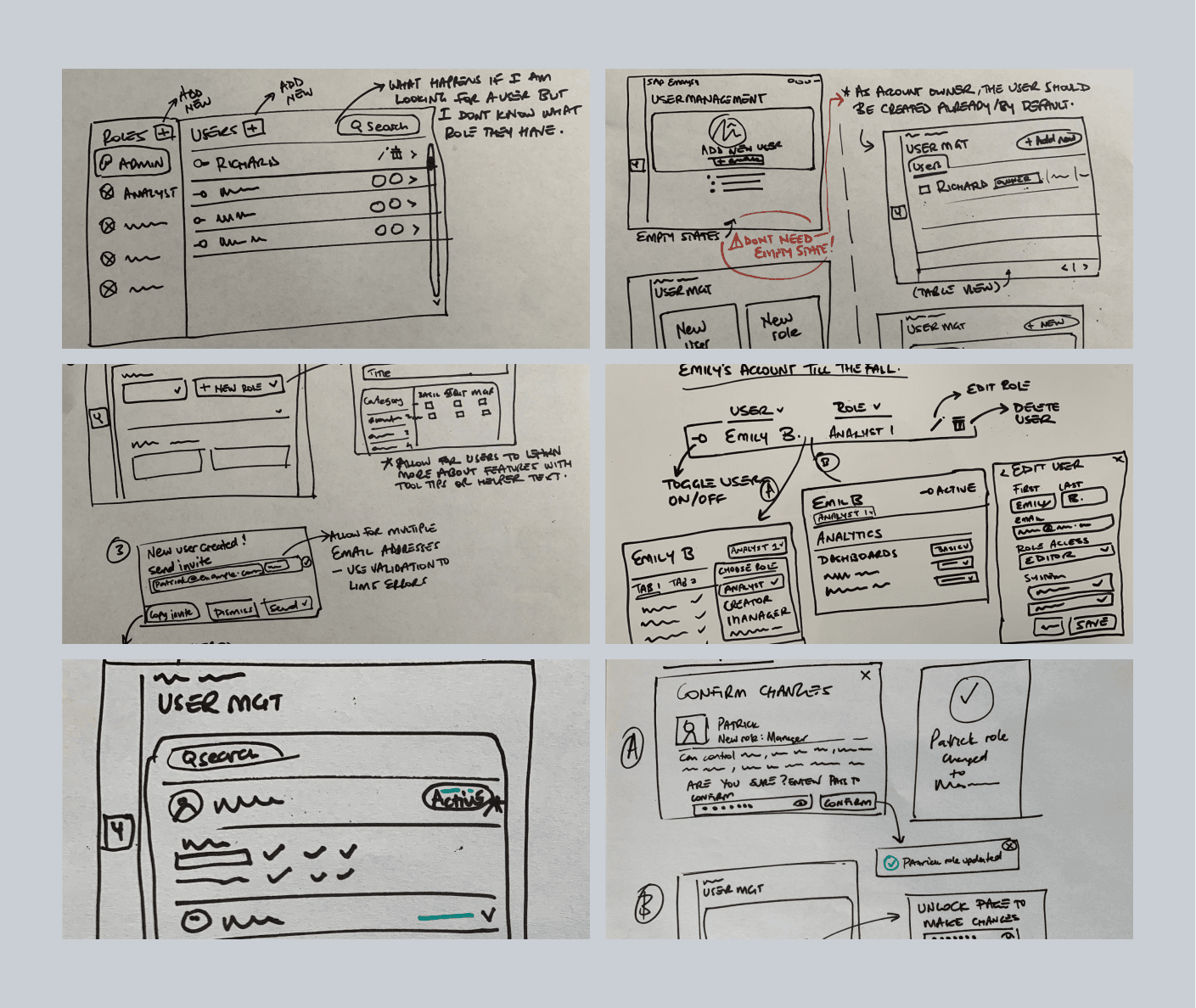
I explored various layouts and workflows through sketches; Layout explorations (table views, list views, accordions, cards) to show context easily, forms, status and confirmation components.
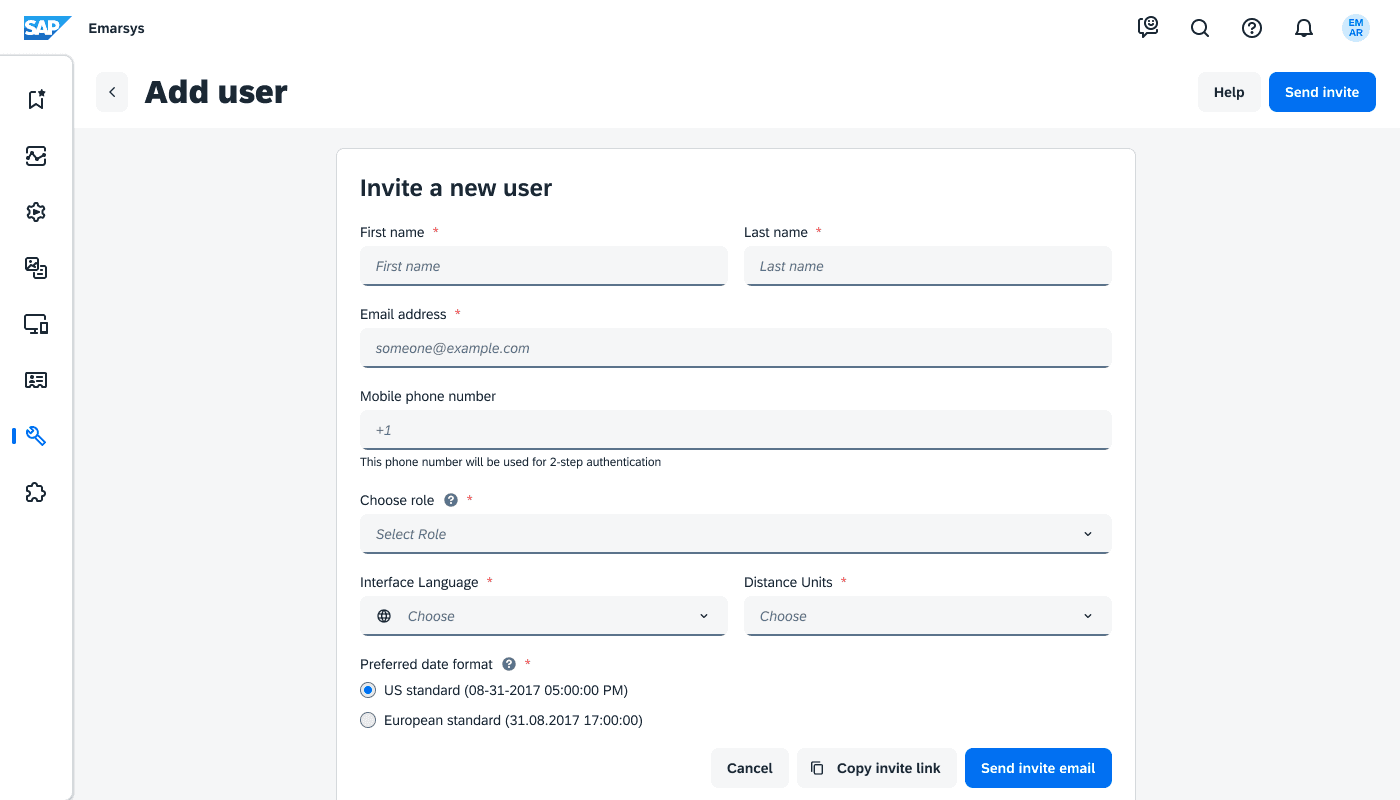
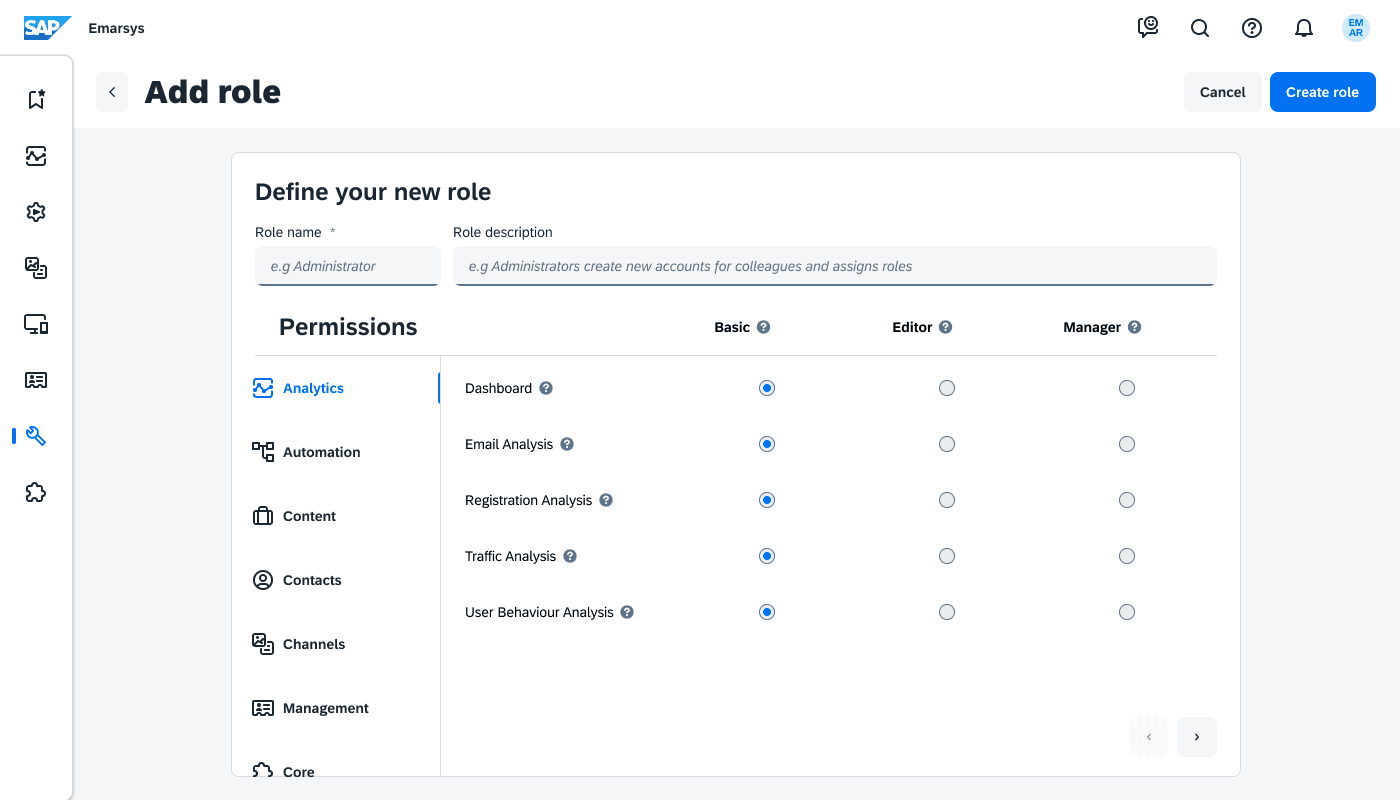
High Fidelity Designs…
Usability Testing
I conducted an unmoderated usability test using Maze to evaluate the effectiveness of the sidebar layout. I hypothesize that users will be able to navigate through roles and users, as well as find it easy to create new roles and users all in this single screen. Explore the clickable workflow here
I recruited 7 participants to perform the following tasks using the Maze app. Explore the testing site here
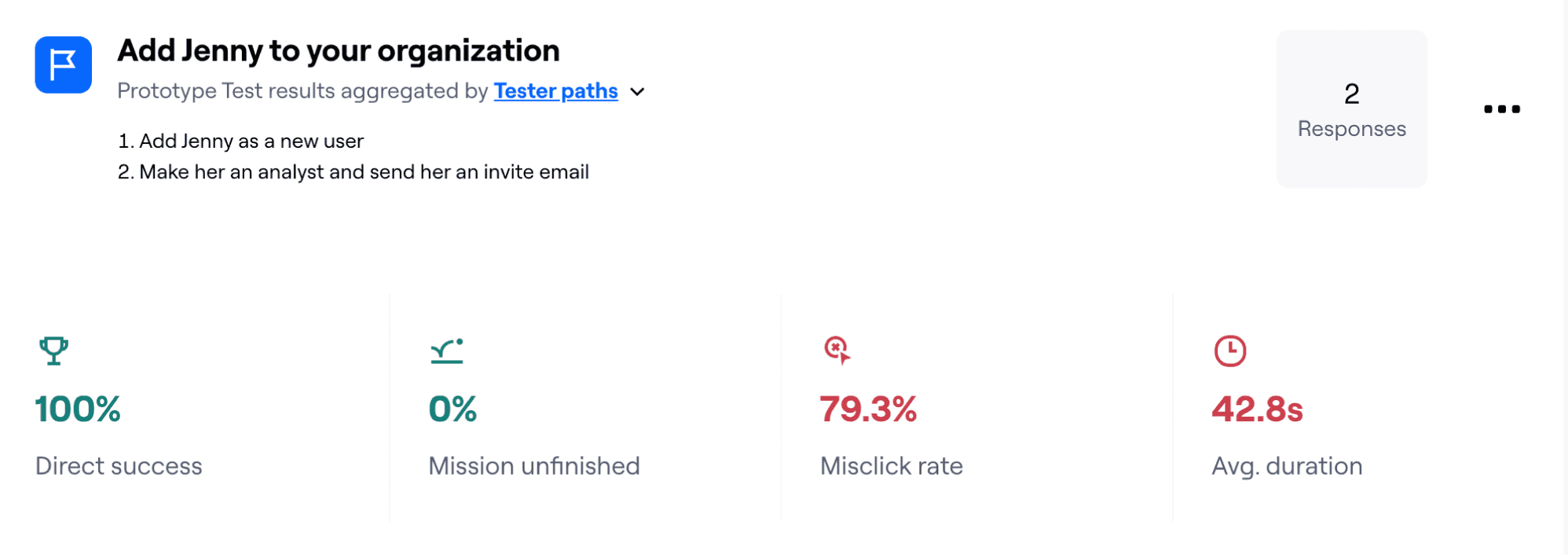
Add a new user named 'Jenny'
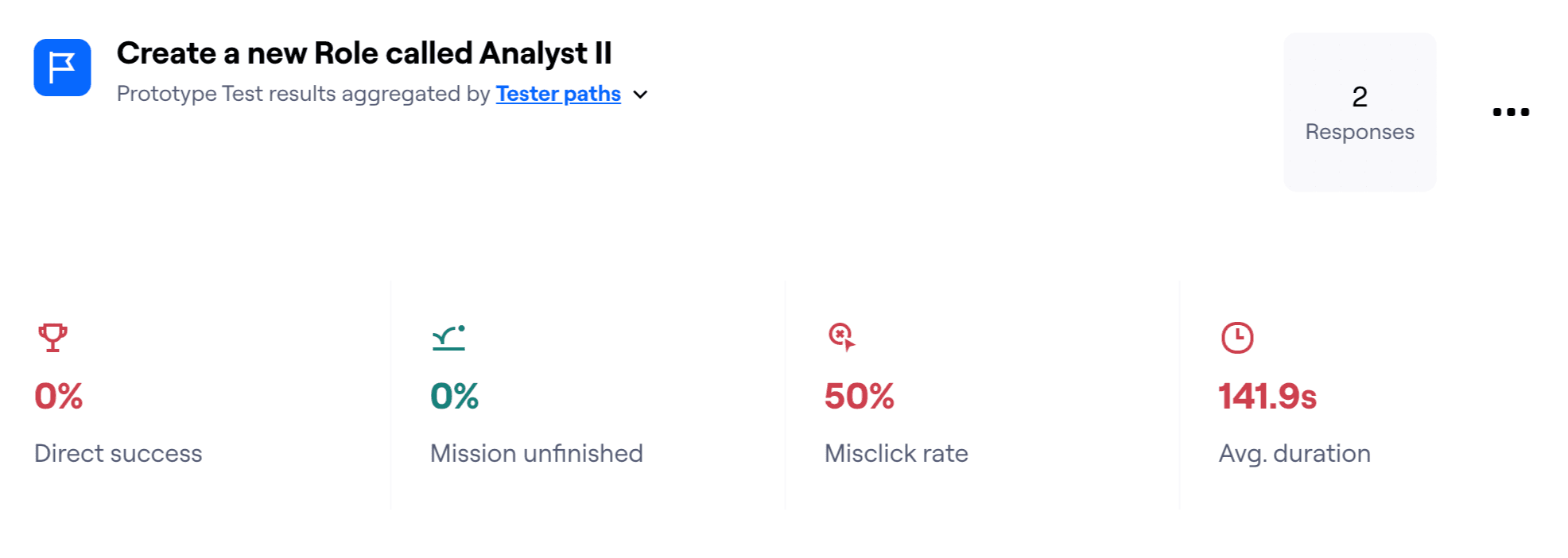
Create a new role called 'Analyst II'
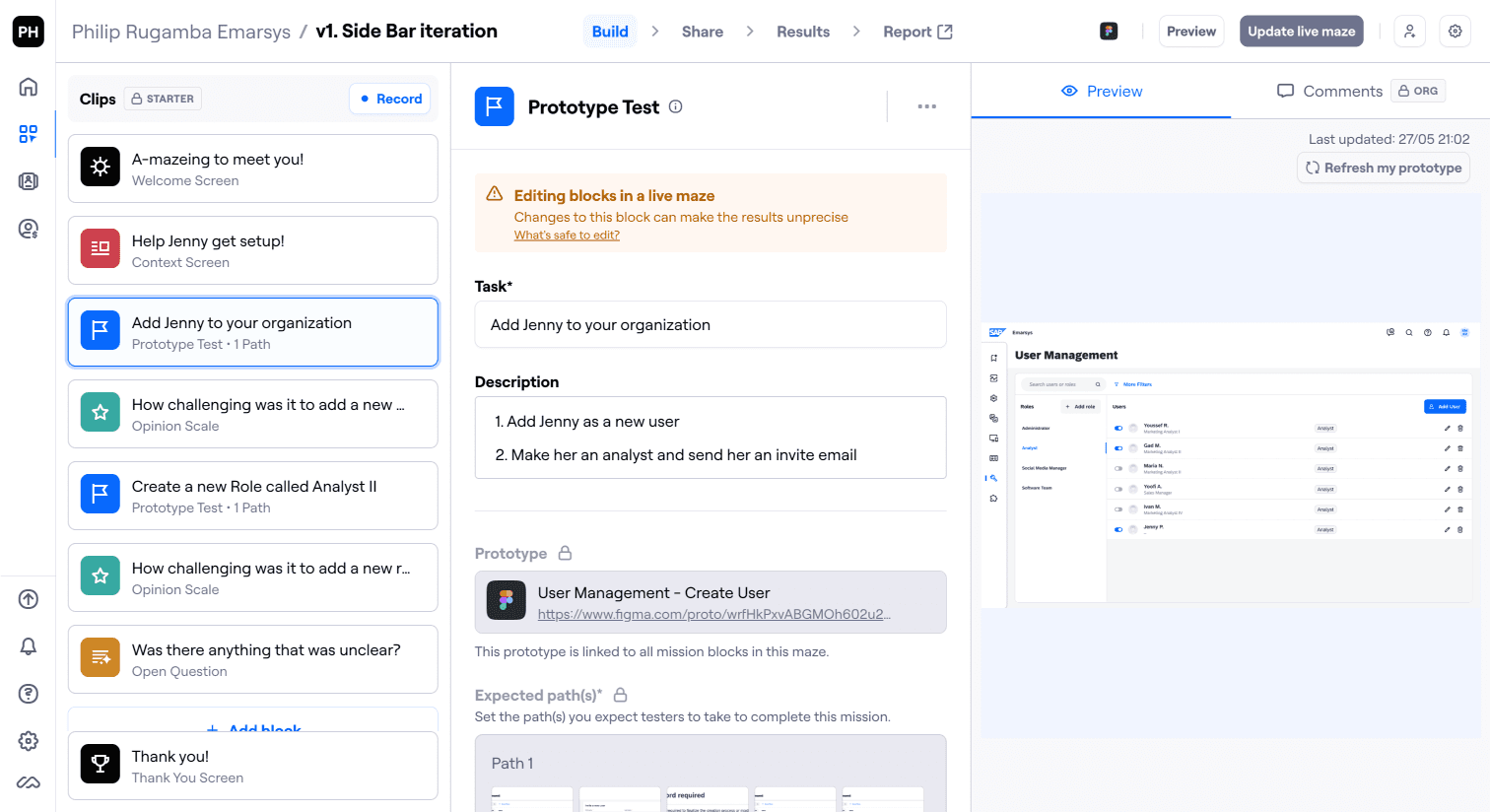
The Maze app (above) was utilized to create an unmoderated user test.
Results…
Everyone completed the first task without issue
Creating new roles proved challenging
Learnings
Testing revealed the sidebar layout was less efficient. However, more testing with a larger sample and power users would be necessary to validate these findings. One thing I would have done sooner is to engage the Emarsys team to understand how they define roles, as it took me a long time to grasp the different uses of the term. I also enjoyed exploring the Emarsys Design System and found opportunities to expand it, particularly with alternative layouts like stacked lists.
Reflection
This project expanded my thinking on access control and its impact on people, both those being invited and those saying goodbye. I reflected on this while biking to the Innovation Park at the University of Notre Dame. Upon arriving at the building, my RFID student card failed to open the door, reminding me that I had graduated and lost access privileges. This moment highlighted the emotional aspect of access control and its design implications. Should the system have been more considerate given my history with the space?

Above: Meeting an apathetic access control system!
I aim to keep exploring how customizing and personalizing workspace access might help teams interact with their work and environment in a more human way.